
Essential Generator Enclosure Requirements You Should Know

A quiet enclosure can still create a failure risk. Heat buildup, blocked access, or a noise complaint can turn a small design gap into downtime. That is why generator enclosure requirements need to be evaluated around protection, sound control, airflow, weather exposure, access, security, durability, and compliance.
What Generator Enclosure Requirements Need To Cover
A good enclosure review follows the way the generator operates: first the unit, then the site, then the surrounding system.
Start With Generator Operating Needs
Effective generator enclosure requirements start with the generator’s operating needs. The core requirements include acoustic control, ventilation, heat removal, weather protection, access, security, durable construction, and compliance planning. Each requirement should support the others so the enclosure protects the unit without restricting operation or service.
Match The Enclosure To Site Conditions
A commercial or industrial generator enclosure also has to fit the site. A generator near an occupied building, property line, loading area, hospital, data center, utility yard, or manufacturing space may face different expectations for noise, access, security, exhaust routing, and weather exposure. From there, acoustic materials, ventilation components, doors, panels, finishes, and layout details can be selected around real operating conditions.
Treat The Enclosure As Part Of The System
Effective designs treat the enclosure as part of the generator system. Panels, louvers, intake paths, discharge paths, doors, seams, mufflers, and service openings all affect performance. When one part is selected without considering the others, the enclosure may look complete but still allow noise to escape, heat to build, or maintenance work to become difficult.
Acoustic Performance And Generator Noise Control
Once the enclosure is treated as part of the generator system, sound control becomes one of the first performance issues to evaluate. Acoustic performance should reduce the sound that travels through the enclosure shell and through required openings. Sound control runs through the panel construction, absorptive lining, acoustical louvers, baffles, mufflers, penetrations, and the direction sound can travel away from the unit.
Openings are often the bigger challenge because the generator needs air movement and exhaust routing. If intake or discharge openings create a direct path from the generator to a sensitive area, sound can escape even when the enclosure panels are well built. Noise control should reduce airborne sound while preserving the arranged openings the generator needs to operate safely.
Ventilation, Airflow, And Heat Dissipation
Among all generator enclosure requirements, airflow has a direct effect on generator operation. A running generator produces heat, and the enclosure must move air in and out so the unit can cool properly. Ventilation has to support combustion air, cooling air, discharge air, and a safe exhaust route away from the enclosure and surrounding occupied areas.
These paths should be coordinated with acoustic treatment so sound attenuation does not restrict required air movement. Oversized openings may help airflow but create noise problems, while undersized openings may quiet the unit but increase heat buildup. Poorly placed openings can pull hot discharge air back into the intake path, so the goal is to control airflow direction, reduce sound leakage, and maintain generator performance during standby operation, testing, or extended runtime.
Weather Protection For Outdoor And Exposed Sites
Once airflow and heat removal are planned, outdoor exposure brings water, corrosion, and seasonal conditions into the design. Rain, humidity, snow, ice, sun exposure, wind-driven water, and corrosive site conditions can all affect enclosure performance. Water has to be managed at seams, thresholds, access doors, louvers, rooflines, penetrations, and drainage points.
Weather protection cannot be separated from airflow because the generator still needs intake, discharge, cooling, and exhaust paths. This is why weatherproof enclosures for generators need water management, airflow coordination, acoustic planning, and service access designed together. Exterior panels, fasteners, hinges, locks, gaskets, finishes, and structural supports should match the generator’s exposure conditions, especially near salt air, chemical processing, heavy washdown, or industrial airborne contaminants.
Accessibility, Security, And Durability
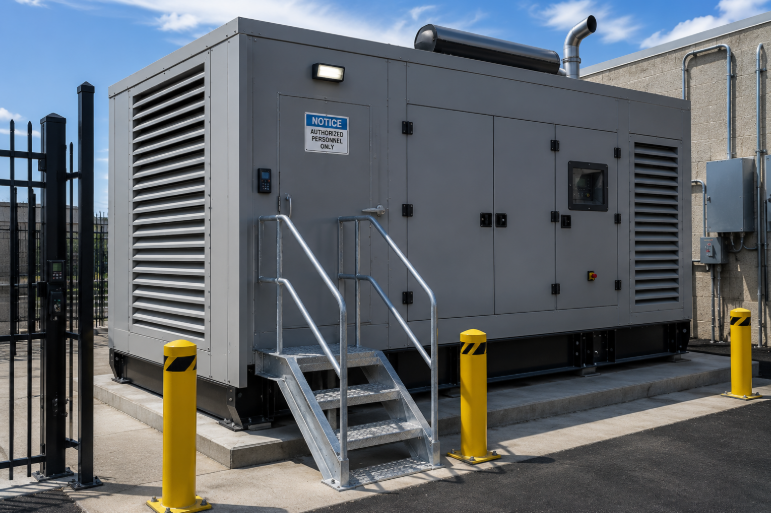
Long-term enclosure performance depends on the people who inspect, service, secure, and repair the generator.
Maintain Practical Service Access
Those weather, airflow, and acoustic details only hold up over time when technicians can reach the generator for routine service. Technicians need practical reach to filters, oil service points, belts, batteries, controls, radiators, wiring, inspection areas, and removable components. They may also need room for radiator service, control-panel inspection, and temporary connections used during load-bank testing.
Access should be designed before the enclosure is built or ordered. Doors need to open where technicians can actually stand and work. Removable panels should provide enough room for inspections and repairs. Clearances around the enclosure should support maintenance rather than force crews to work around walls, fences, piping, landscaping, or adjacent equipment.
Control Access Without Blocking Service
Security adds another layer of planning. Commercial and industrial sites may need lockable doors, tamper-resistant hardware, controlled access, and durable exterior materials. Those security features should protect the equipment without trapping technicians outside during service or emergency response.
A secure enclosure still has to function as a maintainable enclosure. Authorized personnel should be able to reach the generator without working around hardware, doors, or barriers that slow inspection and repair.
Specify Durable Materials And Hardware
Durability ties access and security together. A generator enclosure may sit outdoors for years before it is tested under the worst conditions. Hinges, latches, panels, coatings, gaskets, and acoustic materials need to withstand weather, vibration, service activity, and site exposure without creating new failure points.
Hardware should also hold up to repeated use. A door, latch, or removable panel that fails early can turn a protective enclosure into a service obstacle.
Compliance And Site-Specific Generator Enclosure Requirements
Code, safety, noise, and approval concerns should shape the enclosure before the layout is finalized.
Identify Compliance Conditions Early
Once performance and access are addressed, the enclosure still has to fit the site’s compliance conditions. Noise limits, worker exposure rules, electrical clearances, fire-safety expectations, exhaust routing, fuel-system details, and local approvals may all influence the enclosure. Those requirements should be identified early enough to shape the enclosure layout.
Review Noise Exposure And Site Impact
Noise deserves separate review when sound may reach occupied spaces, neighboring properties, or work areas. Acoustic planning should consider where the generator sits, where sound travels, how often the generator runs, and who may be affected during testing or emergency operation.
Reduce Rework Through Early Coordination
Early coordination also reduces rework. When compliance expectations come after installation, changes can become expensive and disruptive. Facility teams, engineers, and contractors have a better chance to align noise control, access, airflow, safety, and durability before the enclosure becomes part of the site.
Common Generator Enclosure Mistakes To Avoid
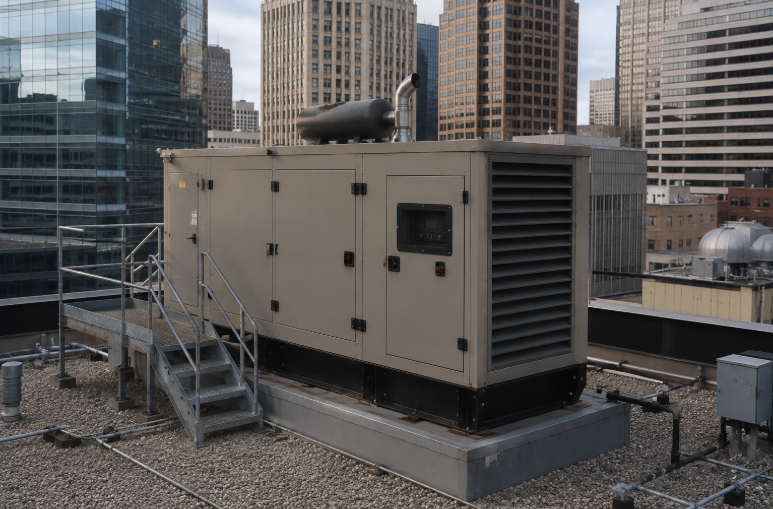
Many enclosure problems show up on paper before they show up in the field. A practical review should look for field-level mistakes that turn a finished enclosure into an operational obstacle.
Common mistakes include:
- Undersized ventilation openings: Small or poorly placed openings can restrict air movement and increase heat buildup.
- Acoustic treatment that blocks airflow: Liners, baffles, or panels should reduce sound without interfering with intake, discharge, cooling, or exhaust paths.
- Direct sound paths through openings: Louvers and vents can let noise escape if they face sensitive areas or lack proper acoustic treatment.
- Poor water management: Rain and wind-driven water can enter through seams, thresholds, doors, penetrations, or drainage areas that were not detailed correctly.
- Limited service access: Doors, panels, and working clearances should allow routine maintenance without major disassembly.
- Security features that slow service: Locks and tamper-resistant details should protect the equipment without making authorized access difficult.
Before the final layout is approved, the enclosure should be checked for sound, airflow, heat, water, access, durability, and compliance as one connected system.
Work With Dynasonics Noise Control To Engineer Generator Enclosures Around Site Conditions
Every generator site brings a different mix of noise, airflow, exposure, access, and operating demands. Dynasonics Noise Control designs custom generator enclosures and engineered noise control solutions for demanding commercial and industrial applications. Contact us today to discuss an enclosure approach built around your equipment, site conditions, and performance goals.