
Weatherproof Enclosures for Generators: Protection Tips for Outdoor Installations
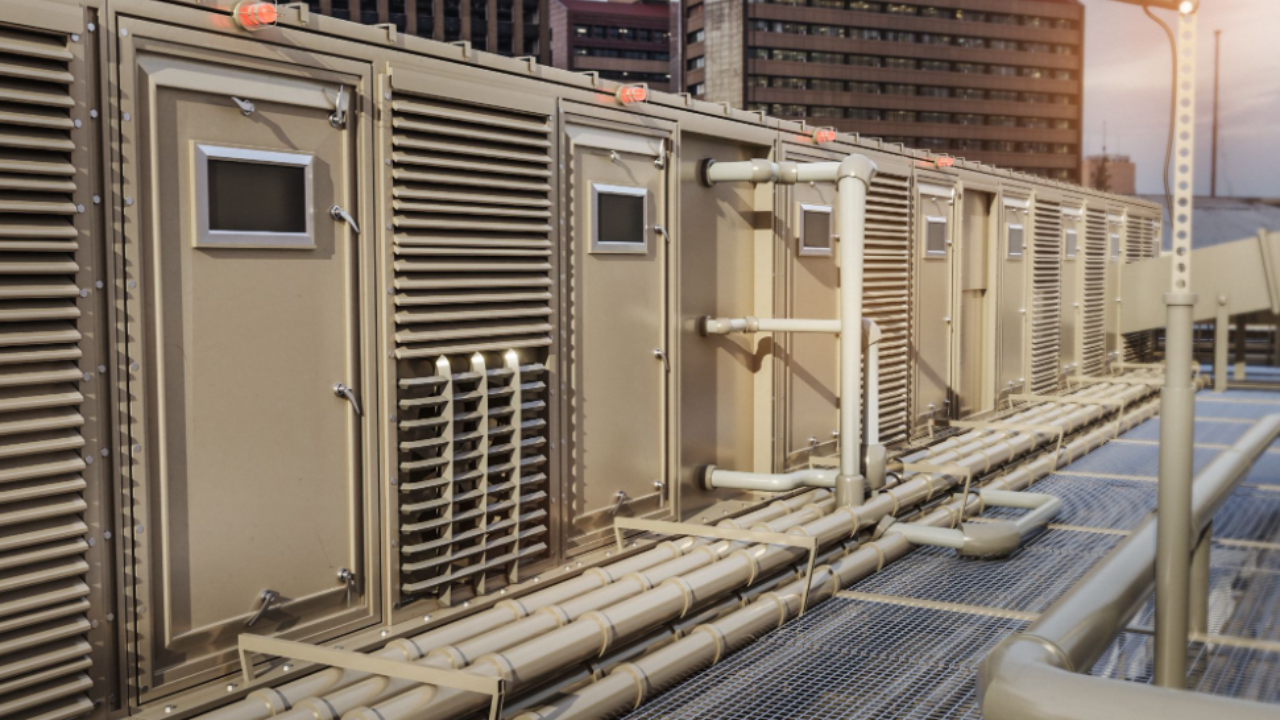
Outdoor generators fail faster when exposure is treated as an afterthought. Weatherproof enclosures for generators matter because rain, heat, humidity, and seasonal cold all put stress on electrical components, metal surfaces, airflow, and service reliability. For facility managers and contractors, the enclosure has to protect the equipment while preserving cooling, access, and site acoustics.
Why Outdoor Weather Exposure Is Hard on Generators
Outdoor exposure creates different failure risks depending on the condition. Rain, heat, humidity, and seasonal cold each affect generator operation and enclosure performance in different ways. That is why enclosure design has to respond to the site environment, not just cover the equipment.
Rain and Water Intrusion
Rain is the most obvious threat, but water damage is rarely limited to direct top-down exposure. Wind-driven rain can move through weak door edges, unprotected openings, and poorly detailed roof-to-wall transitions. Water can also collect around the base and create a wet service area that accelerates rust, complicates inspections, and shortens enclosure life.
Heat and Trapped Air
Heat creates a different kind of failure. An enclosure can look protective from the outside and still raise operating temperatures if hot air is trapped around the generator. That added heat load raises operating stress on the engine, electrical components, and overall reliability, especially when the unit is expected to run for long periods during outages or peak-demand events.
Humidity and Corrosion Risk
Humidity is slower than a storm event, but it can be just as damaging over time. Moisture that lingers inside the enclosure or stays on exposed metal surfaces increases the likelihood of corrosion, especially where finishes are weak or hardware is poorly matched to the environment. Weatherproof enclosures for generators should be reviewed for material compatibility and finish durability in addition to basic rain protection, particularly in coastal, industrial, or persistently damp settings.
Cold Weather and Service Access
Cold weather changes how the enclosure has to perform during inspection, startup, and service. When rain turns to sleet, snow, or ice, enclosure design has to account for freeze-thaw cycling, snow buildup around openings, and the way ice can affect doors, panels, and service access. Seasonal exposure can turn a minor design weakness into an operating problem when technicians need to inspect or service the unit in bad weather.
What Weatherproof Enclosures for Generators Need to Do
A weatherproof enclosure has to manage water entry, airflow, drainage, durability, and maintenance access as one system. The details matter because many enclosure problems tend to show up first at openings, seams, thresholds, and hardware rather than at the center of a panel.
Controlled Openings and Airflow Paths
Under those conditions, detailing matters more than simply adding enclosure mass. Generators need combustion air, cooling air, and a safe exhaust path, so the goal is to keep water out while maintaining a deliberate intake and discharge route. Airflow paths should be engineered around the equipment instead of relying on field-cut openings that leave the unit vulnerable to water intrusion.
Drainage and Water Management
Drainage often decides whether water clears the enclosure or sits at the joints and thresholds most likely to fail first. Water that reaches the enclosure still needs a defined way out, otherwise it collects at door thresholds, panel joints, penetrations, and the equipment base. Good water management depends on the full assembly working together, including the roof profile, seam direction, base condition, and the way the enclosure meets the pad or supporting structure.
Seams, Gasketing, and Long-Term Durability
Seam construction matters for the same reason, but it should be judged as a durability issue, not just a water issue. A panel joint that looks tight on installation day may become a weak point after vibration, thermal cycling, and repeated exposure to sun and weather. Weatherproof enclosures for generators should be evaluated on how doors, penetrations, gasketing, seams, and hardware resist years of vibration and weather cycling, not just a single storm.
Material Selection by Exposure Conditions
Material selection should be tied directly to the exposure profile of the site. Aluminum, stainless steel, and galvanized steel do not behave the same way in wet, corrosive, or high-exposure environments, and neither do the coatings and fasteners paired with them. A weatherproof generator enclosure should match the actual site conditions, because the right material package for an inland installation may not be the right one for a coastal plant, a washdown area, or a site with persistent airborne contaminants.
Why Noise Control and Weather Protection Have to Work Together
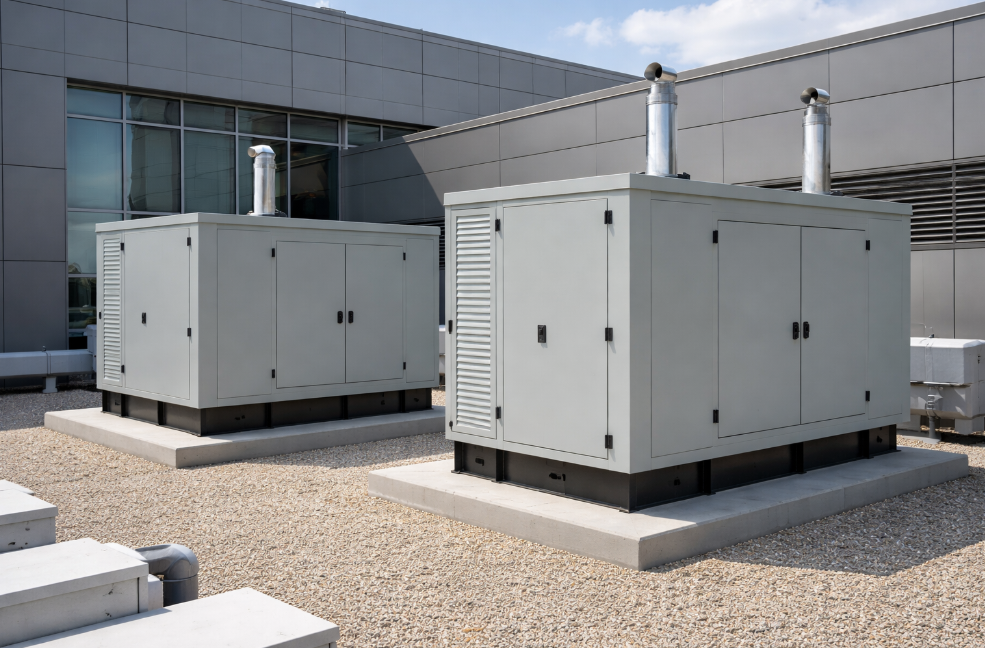
Weather protection and acoustic performance depend on many of the same enclosure details. Openings that move cooling air also let sound escape, so airflow design and sound control have to be coordinated from the start. Sites near occupied buildings, residential edges, campuses, or healthcare facilities often need that balance to be designed into the enclosure rather than added later.
Acoustic treatment has to work with that airflow pattern rather than restrict it. The same intake and discharge routes that keep the generator cool can allow mechanical and engine noise to escape unless the enclosure uses acoustic design measures that work with the airflow path.
Many generic products and improvised builds prioritize rain shielding or partial protection, but they often tighten service clearances, complicate inspections, and make acoustic treatment harder to coordinate with the airflow path. Weatherproof enclosures for generators are more reliable when water management, ventilation, serviceability, and sound attenuation are designed together.
How to Evaluate Enclosure Quality
Quality evaluation works best when ratings, detailing, and site conditions are reviewed together. Reference standards can help, but they are only one part of the decision. The enclosure still has to fit the installation, protect the equipment, and remain serviceable over time.
NEMA and IP Ratings as Reference Points
NEMA enclosure types can help clarify the level of outdoor protection expected from specific enclosure categories. For example, Type 3R addresses rain, sleet, snow, and external ice formation, Type 4 adds protection against splashing water and hose-directed water, and Type 4X adds corrosion resistance. IEC IP ratings can also help compare resistance to solid-object and liquid ingress. Those references help specifiers compare enclosure categories before they review detailing, airflow, access, and site exposure.
What Ratings Do Not Tell You
Ratings do not tell the whole story. They do not replace a review of airflow design, door and seam detailing, maintenance access, structural durability, and the actual site conditions the enclosure will face. They also do not account for how well the enclosure supports routine inspection and service once the unit is operating in the field. An enclosure that looks adequate on paper can still underperform if the detailing, materials, or access strategy do not match the jobsite.
When a Custom Enclosure Makes More Sense
Not every installation needs the same level of enclosure design. Some temporary setups only need short-term rain protection, while permanent or high-demand sites need a much more coordinated solution. The right choice depends on how long the equipment will be in service and what the enclosure has to manage day after day.
Where Temporary Covers Still Fit
For smaller temporary jobsite setups, a portable generator weatherproof enclosure may provide short-term rain protection. Even then, portable units still need to operate outside only, at least 20 feet from buildings when possible, with exhaust directed away from doors, windows, and vents. A temporary cover addresses short-term exposure, not the long-term coordination of airflow, access, acoustics, and site durability.
When Site Demands Justify a Custom Enclosure
That is usually the point where site demands justify a custom enclosure. Sites with tight clearances, washdown exposure, corrosive conditions, acoustic limits, or demanding maintenance requirements often need more than an off-the-shelf shell. Dynasonics builds generator enclosures for sites with those kinds of airflow, access, acoustic, and exposure demands, with configurations tailored to outdoor operation.
Talk with Dynasonics About Outdoor Generator Enclosure Design
A strong enclosure has to manage weather, preserve airflow, support service access, and withstand the conditions the site will actually impose. Sites with those combined demands typically need a coordinated enclosure system rather than a basic cover. When those requirements have to be solved in one enclosure, custom design becomes the more practical long-term approach. Talk with us today to see how we can help.
FAQ: Generator Enclosure Questions for Outdoor Installations
Can a generator enclosure be weatherproof without restricting airflow?
Yes, but only when the enclosure is designed with deliberate intake and discharge paths. A fully closed box can trap heat and create operating problems, so weather protection has to be coordinated with cooling air, combustion air, and exhaust routing.
Do NEMA or IP ratings guarantee that an enclosure will perform well outdoors?
No. Those ratings are useful reference points for water and solid-object protection, but they do not replace a review of airflow design, seam detailing, maintenance access, structural durability, and actual site exposure.
Is a temporary generator cover enough for long-term outdoor use?
Usually not. Temporary covers can help with short-term rain protection, but they do not solve the long-term demands of airflow management, service access, acoustics, corrosion resistance, and repeated weather exposure.
What enclosure details matter most in wet or corrosive environments?
Drainage, seam construction, gasketing, hardware selection, and material compatibility all matter. In harsher environments, the finish system and corrosion-resistant material choice can be just as important as the enclosure shape itself.
When does a custom generator enclosure make more sense than a standard cover?
A custom enclosure usually makes more sense when the site has tight clearances, acoustic limits, washdown exposure, corrosive conditions, or demanding maintenance requirements. Those conditions often require one coordinated solution rather than a basic off-the-shelf cover.