
Industrial Acoustic Panels: Reducing Noise In Heavy-Duty Environments

A loud industrial space wears on people quickly. Noise usually comes from more than one source, as motors, compressors, fans, pumps, and hard surfaces keep throwing sound back into the room throughout the shift. That is usually when facilities start looking at industrial acoustic panels, because they need a way to reduce reflected noise instead of letting it keep building across the space.
How Noise Builds In Large, Reflective Facilities
Heavy-duty noise does not behave like the sound problems people associate with offices, conference rooms, or recording spaces. In a plant, warehouse, or processing area, the room itself often keeps the noise alive. Hard surfaces reflect energy, and large volumes give sound room to travel.
Mechanical equipment adds steady output, tonal noise, and low-frequency energy that can feel as though it sits in the air. When those conditions overlap, the result is a space that sounds harsh, stays loud, and makes routine communication harder than it should be. Concrete, steel, and exposed systems do not do much to calm the room, so the noise keeps circulating.
What Industrial Acoustic Panels Do In Loud Facilities
These panels are designed to absorb part of the reflected sound energy that keeps industrial spaces noisy. At a basic level, industrial acoustic panels are sound-absorbing assemblies built to reduce the amount of noise that bounces back into the work area after striking hard surfaces. That changes how noise moves through the space.
Echo drops, reverberation shortens, and speech usually becomes easier to understand because the space is no longer recycling as much noise. In an industrial setting, that can make the room feel less harsh even when the equipment itself is still producing substantial sound.
How Sound Absorption Changes The Space
The principle is straightforward, but industrial performance still depends on more than one specification. Core material, surface facing, thickness, and mounting method all shape how much sound the panel absorbs and how well it holds up over time. Good results come from matching the treatment to the kind of noise the facility is actually dealing with.
Industrial noise is rarely concentrated in one narrow frequency range. Some equipment produces strong mid-frequency output, while other sources create lower-frequency energy that is harder to control with thin, lightweight materials. That is why panel selection should focus on real performance data rather than broad assumptions about what looks absorptive.
Built For Tougher Conditions
Industrial acoustic panels are built for rougher conditions and a different acoustic profile than office or studio products. Office and studio panels are often chosen around aesthetics, lightweight installation, or general room comfort. Industrial panels have to deal with harsher environments and harder-to-control sound.
Heavy-duty facilities often concentrate sound in low and mid frequencies, and those frequencies are harder to control with thin decorative materials. In industrial settings, the panel may need a denser core, a protective face, a sealed frame, and hardware that stays secure around movement, vibration, and long-term wear. Depending on the application, industrial panels may use fiberglass cores, foam-based designs, or perforated metal facings over absorptive cores, and those construction choices can affect durability, maintenance demands, and acoustic behavior in different environments. Placement matters just as much once the panel construction is right.
Placement Changes The Result
Placement has a direct effect on how much reflected noise the treatment can intercept. Absorptive treatment works best when it is positioned to intercept reflected sound from the loudest parts of the room or to calm the hard surfaces that are extending reverberation.
In a tall warehouse, that could mean suspended baffles or ceiling-hung treatment where wall space is limited. In a mechanical room, it could mean wall-mounted panels near the equipment zone. In a fabrication area with traffic and material handling, the mounting height may need to protect the treatment from impact while still covering the surfaces driving the echo.
Choosing Panels For Harsh Environments
Environmental exposure and day-to-day operating demands should drive the next stage of panel selection.
Moisture, Dust, And Exposure Conditions
When evaluating industrial acoustic panels, start with the environment before you get too far into finish options or broad product claims. Moisture exposure should be near the top of the list. A panel that sees humidity, washdowns, process splash, or outdoor air movement may need a cleanable or foil-faced surface, durable materials and finishes suited to wet or corrosive exposure, and construction that resists sagging or degradation over time.
Dust and particulate matter also matter, especially in facilities where buildup can affect maintenance cycles or panel life. If the area includes chemical vapors, temperature swings, or exterior exposure, the finish and fastening system need to be chosen with those conditions in mind. A panel that works well in a dry interior space may not hold up the same way in a harsher part of the plant.
Operational Durability And Maintenance Access
Operational durability has its own demands in a heavy-duty facility. Equipment moves, access paths shift, and maintenance crews need room to work around the treatment without damaging it. That means the right panel for one area may be a reinforced wall-mounted assembly, while another area may benefit from overhead treatment that stays out of the traffic path.
Maintenance demands should factor into panel selection as well. Some facilities need surfaces that can be cleaned regularly. Others need treatment that can stay in place for years with minimal attention. Good panel selection comes from matching the acoustic product to how the facility actually operates, not to an idealized layout that only exists on paper.
Performance Data Deserves A Closer Look
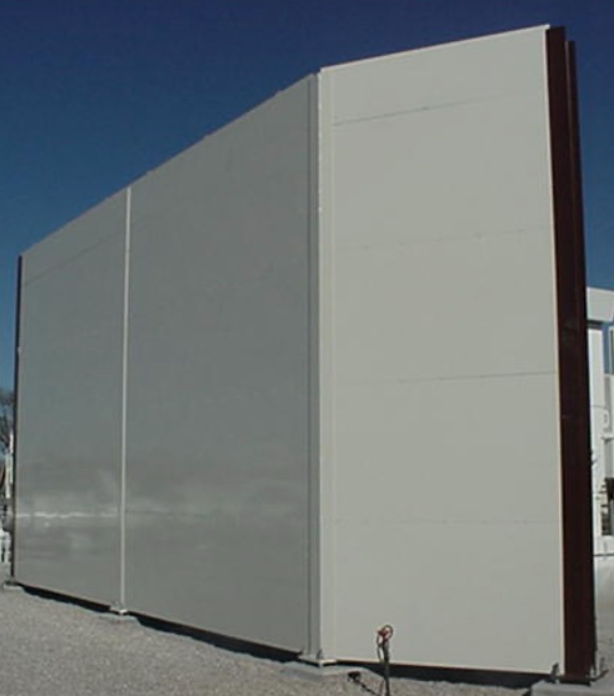
Acoustic performance data deserves attention here as well. Noise Reduction Coefficient (NRC) can be useful as a quick screen, but it does not tell the whole story in an industrial environment. A single summary rating may look strong and still leave a facility disappointed if the dominant problem sits in frequency ranges where lighter materials struggle.
Facilities comparing different sound absorption panels should look beyond broad ratings and focus on how the panel performs under actual industrial conditions. Third-party test data across octave bands gives a clearer picture of what the product is likely to do in a room with machinery noise, hard surfaces, and long reverberation paths. That kind of data matters because noise-control decisions affect communication, awareness, and daily work in loud facilities.
Noise Control, Safety, And OSHA
OSHA gives industrial facilities a clear reason to treat noise as an operational issue, but panel selection still has to be tied back to the broader control strategy.
Exposure Benchmarks And Monitoring
OSHA is one reason this topic deserves serious attention. Under 29 CFR 1910.95, the general industry standard uses 90 dBA over 8 hours as the permissible exposure benchmark for noise, and it establishes an 85 dBA 8-hour time-weighted average as the action level for a hearing conservation program. The standard also requires monitoring when there is reason to believe employee exposure may meet or exceed that action level.
Where Acoustic Panels Fit In The Strategy
That does not mean acoustic panels solve every compliance issue on their own. Source control, equipment enclosures, barriers, administrative controls, and hearing protection may all still play a role. Even so, reducing reflected noise inside the room can support a broader noise-control strategy and make communication easier in spaces where workers need to hear instructions, warnings, and one another.
The best industrial acoustic panels are selected after the facility looks at noise source, room behavior, panel location, and long-term maintenance demands together. A plant with washdown requirements, open steel surfaces, and heavy equipment traffic may need a very different panel construction than a warehouse trying to reduce long reverberation over a large floor plate. When those variables are evaluated together, absorptive treatment becomes easier to specify and more likely to deliver measurable noise reduction under actual operating conditions.
Talk With Dynasonics About Panel Selection
Dynasonics can help match panel construction, placement, and performance data to the conditions inside your facility. The right panel system depends on the equipment, the space, the exposure conditions, and the kind of noise you are trying to control. Contact Dynasonics today for more information.
Frequently Asked Questions
What Are Industrial Acoustic Panels Used For?
These panels are used to reduce reflected noise, shorten reverberation, and make loud facilities easier to work in. They are commonly installed in plants, warehouses, and mechanical spaces where hard surfaces keep sound circulating.
Do They Reduce Machinery Noise or Mainly Echo?
They mainly reduce reflected noise and reverberation inside the room. That can make the space sound less harsh and improve communication, but source control may still be needed when equipment itself is producing high sound levels.
Where Should Sound-Absorbing Treatment Go In a Plant or Warehouse?
It should be placed where it can intercept reflected sound from the loudest parts of the room or calm the hard surfaces extending the echo. Depending on the layout, that may mean wall-mounted treatment, suspended baffles, or ceiling-hung panels.
What Matters Most In Wet or Dusty Facilities?
Moisture exposure, dust buildup, cleanability, finish durability, and mounting method all matter. The right panel should match both the environmental conditions and the way the space is used day to day.
Can Acoustic Panels Help With OSHA-Related Noise Concerns?
They can support a broader noise-control strategy by reducing reflected sound and improving communication inside the space. They are one part of the solution, not a substitute for source control, monitoring, or other required protective measures when exposures are high.