
Effective Ways To Reduce Generator Noise And Vibration

Generator noise does not stay at the generator. The hum, exhaust pulse, and floor vibration can make crews talk over the equipment, disturb nearby offices, and send low-frequency rumble through the surrounding structure. Effective generator noise reduction starts by finding the sound source, tracking its path, and matching the fix to the equipment, site, and people working nearby.
Where Generator Noise And Vibration Start
From a distance, generator noise may seem like one steady roar. Up close, several things are usually happening at once: the engine produces mechanical sound, the exhaust creates sharp pulses, the cooling fan moves air through the unit, and the generator base can send vibration into the pad, frame, slab, or floor beneath it.
Cooling airflow creates another sound route when intake and discharge openings give noise a way out of the unit. When a generator is enclosed, ventilation has to quiet that route without starving the engine, trapping heat, or sending sound toward nearby workers and occupied spaces. Sound-control planning also has to account for sound attenuation while maintaining airflow, because open air paths can carry sound as well as ventilation.
Separate Airborne Noise From Structure-Borne Vibration
A useful generator noise reduction plan starts by separating airborne noise from structure-borne vibration before choosing equipment or materials. Airborne noise travels toward nearby workers, offices, property lines, and other receiver areas. It can reflect off masonry walls, metal panels, pavement, and equipment screens, which makes the same generator seem louder in one location than another.
Some of the most noticeable noise moves through contact instead of open air. A generator can shake the mounting surface and send energy into nearby structure, where floors, frames, or walls may reradiate that vibration as sound. A quick field check can help the team tell the difference between engine noise, exhaust discharge, fan openings, and surfaces that buzz or hum, though sound readings are still needed when exposure, complaints, or design decisions require more certainty.
Use Generator Noise Reduction Methods That Preserve Airflow
When the dominant problem is airborne sound around the unit, an acoustic enclosure is often the most direct control method. The enclosure creates a boundary between the equipment and the surrounding area. Generator enclosures can use dense barrier materials, absorptive lining, and access points that let maintenance teams reach the generator without dismantling the system.
An enclosure still has to support normal generator operation. Engines need combustion air, exhaust routing, heat relief, and service clearance. If an enclosure blocks ventilation or makes routine maintenance difficult, the noise issue may turn into an overheating or access problem. Strong noise-control work keeps acoustic treatment, operating requirements, and maintenance in the same design conversation.
Reduce Reflected Sound With Absorptive Materials And Barriers
Sound-absorbing materials help when noise bounces around hard surfaces. These materials reduce reflected energy rather than eliminating the sound source itself. In an enclosure, absorptive lining can limit internal buildup; in a room or yard, acoustic panels or barrier systems can help manage the space between the generator and the receiver.
Barriers are useful when the main problem is direct line-of-sight travel. A properly placed acoustic barrier interrupts the path between the generator and the people or spaces affected by it. Height, distance, edge conditions, and surrounding surfaces all affect whether the barrier blocks the sound path or lets noise wrap around the treatment.
Treat Exhaust Noise As A Separate Path
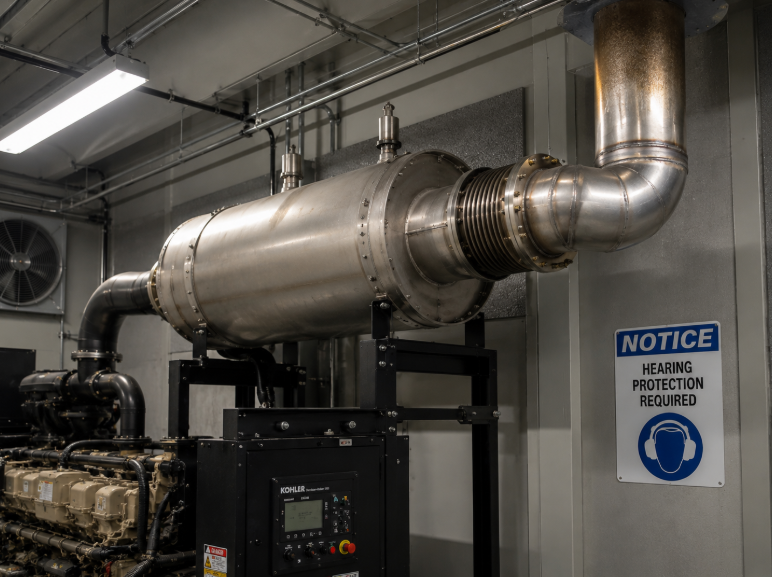
Even when the area around the generator is controlled, the exhaust can remain a separate noise path. Exhaust noise often carries a strong pulse and can travel beyond the equipment footprint. A silencer or muffler can reduce that contribution when it is selected for the generator, exhaust system, and operating condition, especially in diesel generator noise reduction applications where engine load and site layout shape what workers hear nearby.
Discharge direction matters, too. An exhaust outlet aimed toward loading docks, service corridors, offices, property lines, or other active areas can keep the noise problem alive after the enclosure or barrier has been addressed. The silencer also has to match the generator and exhaust route so sound control does not create an operating restriction outside the manufacturer’s requirements.
Isolate Vibration Before It Travels Into The Structure
Vibration isolation mounts address the part of the problem that enclosures and absorptive materials cannot fully solve. These mounts create separation between the generator and the structure supporting it. Depending on the equipment and site, that may involve isolators, pads, spring mounts, or other mounting details selected around the generator’s weight, operating speed, movement, and support condition.
Rigid connections can keep vibration moving even after airborne sound has been reduced. Piping, conduit, fuel connections, exhaust connections, and nearby framing can all become transfer points. Isolation details should account for those connections so the building or pad does not continue carrying the rumble.
Combine The Right Controls For The Site
A complete generator noise reduction strategy usually combines several methods because each source behaves differently. The strongest plans coordinate treatment around the equipment layout rather than treating each issue in isolation:
- Enclosures help contain airborne engine, fan, and mechanical noise.
- Silencers reduce the exhaust contribution when matched to the generator and exhaust route.
- Absorptive treatments limit reflected sound inside an enclosure, room, or equipment yard.
- Isolation details reduce vibration transfer before it reaches the floor, pad, frame, or nearby structure.
Site layout still shapes the result. Moving the generator farther from sensitive areas may help when the site allows it, but distance works best when hard walls, pavement, and metal surfaces are not redirecting sound back toward the receiver. For temporary commercial and jobsite generators, temporary barriers, better placement, vibration pads, and careful exhaust direction are usually the first practical measures to evaluate.
Keep OSHA And Daily Operations In View
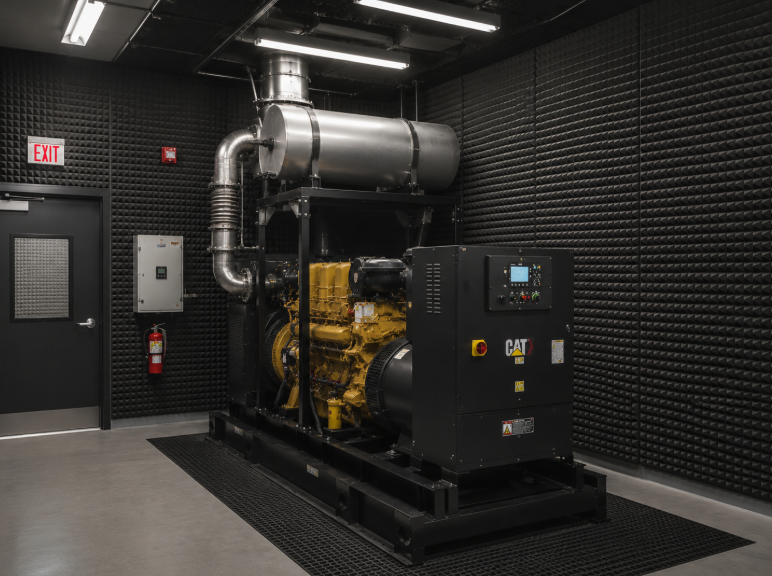
Noise control also affects safety planning because a generator can interfere with communication and expose crews for extended periods.
Noise Exposure Affects Daily Safety
Generator runtime, location, and nearby work activity all affect worker exposure. OSHA noise exposure standards are built around protecting employees from harmful sound levels over time. A noisy generator can also interfere with speech, warning signals, maintenance coordination, and situational awareness, which makes control planning part of daily site safety.
Sound Readings And Service Access Guide The Response
A short test-run complaint does not call for the same response as a generator that disrupts daily operations. If the unit runs for long periods, sits near occupied spaces, or exposes crews for extended periods, the facility may need sound measurements and a more engineered plan. Sound readings can help separate the dominant airborne source from exhaust noise, vibration transfer, or reflected sound before a team selects the right generator noise reduction method.
A practical noise reduction plan also has to leave room for inspection and service. Maintenance teams need access to panels, filters, controls, fuel systems, exhaust components, and emergency shutoffs. Contractors need clearance to install the system properly, and facility teams need noise-control measures that stay workable after routine service.
Match Dynasonics Noise-Control Systems To The Equipment And Site
Dynasonics works with facility teams and contractors to trace the dominant noise path before an enclosure, silencer, isolation detail, or absorptive treatment is selected. The final approach should account for the equipment layout, airflow requirements, access needs, and vibration conditions around the generator. Contact us today for more information.
Frequently Asked Questions About Generator Noise And Vibration
What Causes Generator Noise And Vibration?
Generator noise usually comes from engine operation, exhaust discharge, cooling airflow, and vibration moving through the base, pad, floor, or nearby structure.
What Is The Best Way To Reduce Generator Noise?
The best method depends on which source is driving the complaint, but enclosures, exhaust silencers, absorptive materials, barriers, and isolation mounts often work together.
Can A Generator Enclosure Cause Overheating?
A poorly planned enclosure can restrict airflow or trap heat, so ventilation, exhaust routing, cooling airflow, and service access must be planned before installation.
Do Vibration Mounts Help With Generator Noise?
Vibration mounts can help when structure-borne vibration is part of the problem because they reduce energy transfer into the pad, floor, frame, or nearby structure.
When Is Generator Noise An OSHA Concern?
Generator noise becomes an OSHA concern when employee exposure levels approach regulated workplace noise thresholds, including OSHA’s 85 dBA hearing conservation action level and 90 dBA permissible exposure limit for an 8-hour workday.