
Office Soundproofing Solutions: Create a Quiet and Productive Space

The biggest acoustic problem in today’s offices isn’t volume. The issue is clarity. Conversations carry. Privacy disappears. Small distractions escalate into measurable productivity loss. Most noise complaints in offices result from poor acoustic isolation.
What Causes Office Soundproofing Failures
Loud equipment is not the primary cause. These failures stem from design flaws such as:
- shared plenums
- thin partitions
- undersealed doors
These allow sound to pass between spaces. Acoustic discomfort interferes with focus, undermines compliance, and drives facility complaints. Effective office soundproofing requires targeted solutions that interrupt sound paths, absorb reverberation, and contain transmission between areas.
Sources of Sound Transfer in Modern Offices
Sound in offices travels through both airborne and structural pathways. Speech, phone calls, and equipment noise can pass through untreated walls, under door gaps, or around ceiling tiles. Even small openings in a partition—less than 1 % of the total surface area—can leak over 50 % of incoming noise.
Cross-referencing ASTM E90, small leaks of 1 % can reduce STC by over 20 points. Many office soundproofing failures begin with incomplete wall assemblies or improperly sealed mechanical penetrations. These issues are rarely cosmetic—they require engineered containment.
Identifying the Most Common Failure Points
Once the main noise paths are identified, the next priority is locating specific weaknesses in office assemblies that let sound bypass intended barriers.
Assembly-Level Weak Points That Undermine Isolation
Several key architectural elements consistently allow noise to bypass intended barriers. Each must be addressed directly.
Interior Doors Without Seals
Interior doors without seals, thresholds, or mass-rated cores allow speech to leak freely into adjacent rooms. This issue affects:
- conference rooms
- executive offices
- enclosed pods
In other words, spaces where speech privacy is essential. Drop seals, perimeter gasketing, and upgraded door assemblies can raise STC ratings significantly without structural rebuilds. If you're evaluating how to soundproof an office, start by addressing weak door assemblies.
Lightweight Partition Walls
Interior walls built with single-layer gypsum and metal studs typically yield STC ratings around 35. That’s not enough to block normal speech. Adding layers, introducing staggered framing, or decoupling the wall using resilient channels can raise performance into the STC 50+ range—enough to reduce intelligibility and meet privacy targets.
For facility managers exploring soundproofing office walls, these upgrades form the foundation of any successful design.
Ceiling Pathways and Plenum Bleed-Through
Drop ceilings are common in commercial buildings, but they rarely provide acoustic isolation. Without sealed plenum barriers, sound can travel across bays and reenter neighboring rooms. Open return air paths make the problem worse. Barrier tile upgrades, return silencers, and lined ducts can block ceiling-based leakage.
Fixtures like light cans and diffusers also need isolators or back boxes to seal cutouts and prevent reflection into shared cavities. Ceiling return paths are a critical weak point in office soundproofing systems, especially when air handling is shared across zones.
Mechanical Systems That Transmit Noise Into Zones
Mechanical equipment introduces noise through multiple paths, requiring both diagnosis and targeted treatment.
Vibration and Airflow Noise from HVAC Equipment
HVAC systems introduce mechanical noise directly into occupied spaces. Fan coils, terminal boxes, and ducts without internal lining generate low-frequency rumble and white-noise-style masking at unintended levels. These issues affect NC ratings and employee comfort.
Acoustic Treatment Options for Mechanical Transfer
Targeted treatments may include the following, depending on system pressure and flow rates:
- Flexible connectors – Reduce vibration transmission at duct junctions
- Vibration mounts – Isolate mechanical equipment from structural contact
- Duct silencers – Absorb mid- to low-frequency air movement noise
- External enclosures – Contain equipment noise and improve overall attenuation
Even with mechanical transfer controlled, untreated reflection can continue to affect clarity and comfort. Unlike airborne leakage through shared ceiling cavities, mechanical systems introduce vibration and fan-driven noise directly into occupied zones.
That’s why soundproofing an office requires both structural isolation and reverberation control inside the space.
Modular Isolation Strategies for Retrofit Zones
For flexible acoustic containment, some facilities install modular soundproof booths or apply mass-loaded vinyl (MLV) barriers within walls or ceilings. These options help isolate specific zones without requiring full rebuilds, making them ideal for:
- Office retrofits
- Tenant improvements
- Hybrid workspace conversions
- High-sensitivity meeting or recording zones
Each acoustic strategy—whether structural, mechanical, or modular—must be integrated with precision to meet performance goals in today’s complex office environments.
Treating Reflection Versus Containing Transmission
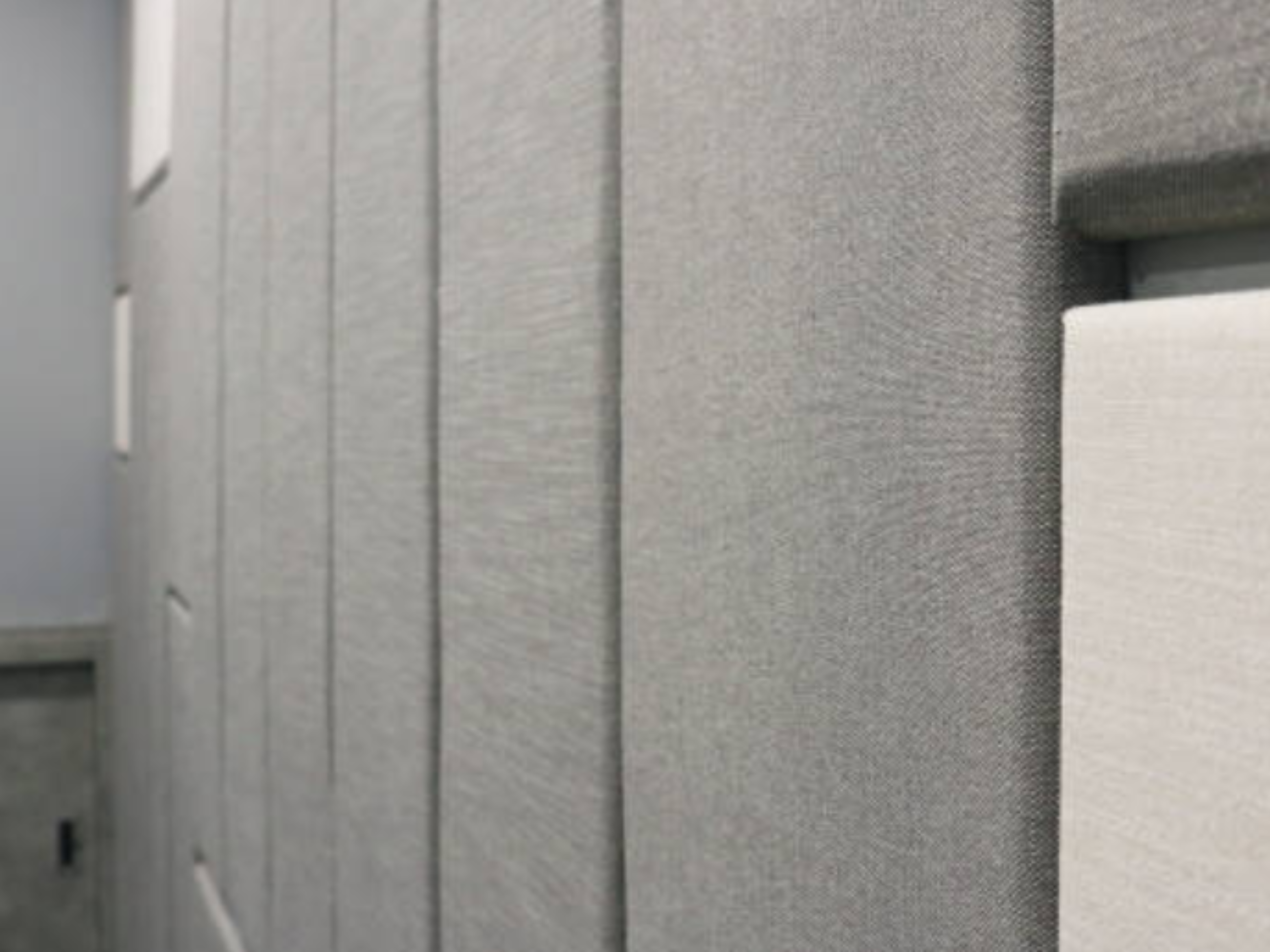
Two different acoustic objectives must be addressed: reducing reverberation inside a room and blocking sound between rooms. Each requires different materials and system strategies.
Absorptive Materials and Reverberation Control
Excess reverberation makes even quiet sounds hard to understand. Hard-surface rooms with glass, tile, or drywall reflect mid- and high-frequency speech energy. To correct this, panels and baffles are installed to absorb reflections and reduce speech decay time. High-NRC materials shorten reflection cycles and support clarity in conference rooms, open offices, and lobbies.
Transmission Loss and STC Assemblies
Transmission problems arise when sound passes through walls, doors, or ceilings into other zones. Solutions rely on mass, decoupling, and airtight seals. Each rated assembly must be properly installed—no gaps, consistent material contact, and perimeter coverage. Even an STC 50 wall fails if the doorframe or electrical box isn’t sealed to spec.
Designers assess SPC (Speech Privacy Coefficient) following ASTM E2638. Higher SPC values indicate reduced speech intelligibility in adjacent zones, complementing wall STC strategies. Together, these ratings define measurable performance benchmarks for commercial office soundproofing design, particularly in sensitive environments like healthcare, finance, and HR spaces.
Material Selection, Placement, and Field Conditions
Acoustic panels must match both their tested ratings and the specific installation environment to perform effectively. NRC, STC, and fire resistance ratings guide selection, but layout is equally critical. Performance may be influenced by:
- panel thickness
- spacing
- mounting height
- backing surfaces
Mismatched off-the-shelf solutions often underperform when installation variables aren’t accounted for. Custom-fitted treatments avoid field failure and eliminate acoustic blind spots.
Why Field Integration Matters More Than Ratings Alone
For those wondering how to make an office more soundproof, product ratings only go so far—performance depends on architectural and mechanical integration.
A controlled study published in the Journal of Environmental Psychology found that participants exposed to simulated open-plan office noise (51 dBA) performed significantly worse on working memory tasks and reported higher fatigue and lower motivation compared to quiet conditions. These results reinforce the need for performance-rated acoustic assemblies that limit speech distractions and preserve concentration.
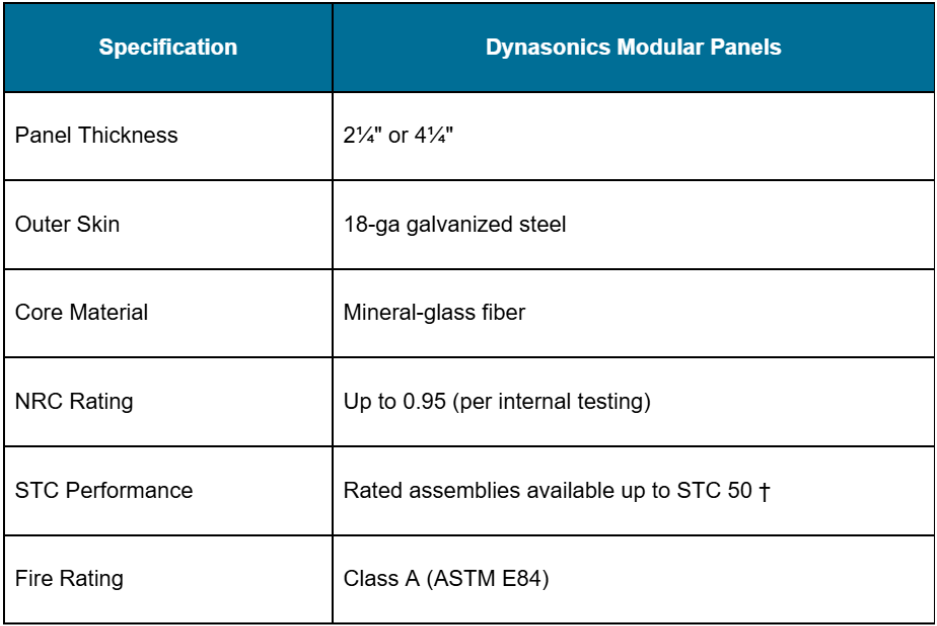
Dynasonics acoustical panels provide higher NRC and comparable STC than typical acoustic options. The mineral-fiber core and steel skin enhance low-frequency control and impact resistance while maintaining Class A fire rating. These panels are ideal for teams researching the best way to soundproof an office without disrupting interior architecture.
Code Targets and Speech Privacy Benchmarks
In environments where privacy and performance intersect, soundproofing is often governed by strict design standards and measurable acoustic criteria.
Acoustic Compliance in Regulated Office Types
Regulated office types—including medical, legal, and financial suites—may face mandatory acoustic thresholds. Many projects follow ANSI, LEED, or IBC guidance on STC, background noise, and speech privacy coefficients. Meeting these targets requires isolation details beyond standard construction. Pre-sealed assemblies, fire-rated acoustic panels, and perimeter sealing details help ensure performance under audit.
Behavioral Strategies That Support Acoustic Design
When speech privacy matters, precision planning is required. Quiet computing protocols—like scheduled focus hours, quiet zones, and private booths—can reduce background distraction and support acoustic materials. These behavioral tactics complement physical office soundproofing measures for balanced acoustic outcomes.
Supplemental Technologies in Open-Plan Environments
In open-plan offices, where physical barriers are limited, sound masking systems or designated quiet zones can further reduce speech distraction. These behavioral and electronic protocols supplement physical soundproofing by managing background noise and enforcing privacy-focused workspaces.
Align Your Office Soundproofing Strategy with Dynasonics Expertise
We engineer each system for measurable acoustic control. Our acoustical panels are rated, field-tested, and adaptable to existing conditions. Ensure your assemblies meet project-level acoustic benchmarks. Contact us today to align your soundproofing system with code and performance expectations.