
Commercial Security Grilles: What to Know When Security and Sound Control Both Matter

A return air opening can also become a noise path. That is why commercial security grilles can be harder to choose than they first appear. In buildings where an opening has to stay secure while still serving as a return air path, wall vent, or transfer opening, the decision can affect noise between spaces as much as it affects physical access.
Where Secure Airflow Grilles Are Used
In practical terms, commercial security grilles are used where an opening needs to stay secure but still has to allow airflow or limited access. You will often see them at return air openings, wall vents, mechanical room openings, transfer openings between spaces, and other locations where the system cannot simply be closed off with a solid panel.
In some projects, the opening also sits near occupied rooms where people are working, meeting, resting, learning, or talking. That is when the acoustics piece starts to matter a lot more, because the opening is no longer only about access and durability. It is also part of how the building handles sound.
Why Return Air Openings Need Extra Attention
A return air opening is a good example. It looks simple from the outside, and the basic job seems straightforward. Air has to get back to the system, so the opening needs to stay open enough to do that work.
At the same time, the opening may be accessible from a corridor, a common area, or another room where the owner wants more control over who or what can get through. If that same path also allows voices, equipment noise, or general room sound to pass too easily, the opening can create an issue that was never obvious on the first walk-through.
Why Security-Only Selection Can Create Noise Problems
Part of the reason is that acoustics are harder to catch during design review than a visible security risk. Security concerns are physical and easy to picture. Sound transfer is harder to spot before the system is running and nearby rooms are occupied.
By the time people notice weaker speech privacy or more noise moving from one space to another, the opening is already doing exactly what it was built to do. The grille may be strong enough. The problem is that the opening was never evaluated as a sound path.
What Usually Shows Up After Installation
That is where many projects start to show problems. A grille may look rugged, fit the opening, and seem like a clean answer from a security standpoint. After installation, the space can end up with more room-to-room sound transfer, more HVAC-related noise, or less privacy than the team expected.
Nobody sets out to create that problem. It usually happens because the opening was treated as a security item first and an acoustical path second. Once that happens, the solution usually starts with a closer look at the full opening condition, not just the visible grille.
What to Look for in Commercial Security Grilles
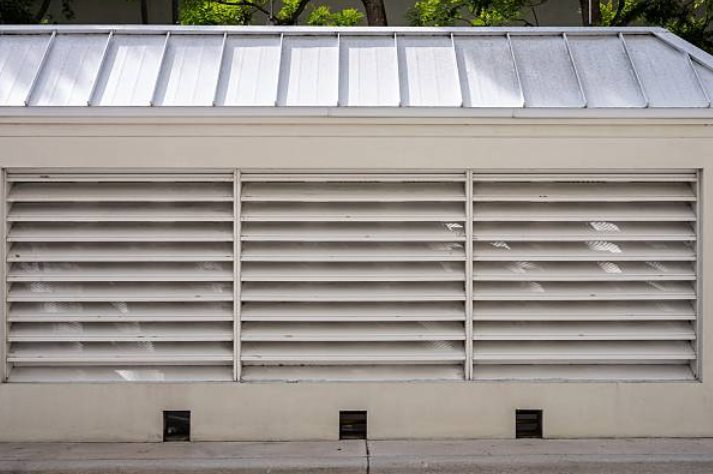
The selection process does not have to get overly technical, but it does need to cover more than strength alone.
Start with Sizing
Start with sizing. If the grille is undersized for the airflow path, the opening can become more restrictive than intended, and that can affect system performance and noise. If the opening is oversized or poorly matched to the surrounding construction, the air path can become harder to coordinate cleanly with the wall or duct path.
Right sizing may seem basic, but it has a big effect on how the opening performs. A grille that is physically secure but poorly matched to the opening can still create problems once the system is operating. That is one reason these choices need to be made with the full use of the opening in mind.
Use Materials That Match the Exposure
Material strength also matters, and this is where the security conversation usually begins. A flimsy grille does not become acceptable because it moves air well. The assembly has to match the exposure, the abuse level, and the type of facility.
That usually means paying close attention to the construction of the frame, the face, the fasteners, and the way the unit ties into the surrounding wall or opening. A stronger assembly gives the owner a better chance of holding the line on security over time instead of watching the opening become a maintenance problem. Good material selection supports the long-term use of the opening instead of treating the installation like a one-time fix.
Make Sure the Air Path Still Works
Strength, though, is only part of the picture. The opening also has to work for the air path. A grille can be strong and still be the wrong choice if it creates a poor path for return air or transfer air.
This is where teams sometimes fall into a false sense of completion. The opening looks protected, so the job feels done. In reality, the air still has to move where the system needs it to move.
If that path is handled poorly, the result can be pressure issues, unwanted noise, and comfort complaints that show up after occupancy. Handled poorly, the opening becomes an operating issue for the building.
Account for Sound Attenuation
When commercial security grilles are being used in secure airflow openings for occupied buildings, sound attenuation deserves a place in the same conversation. That phrase can sound more complicated than it is. It simply means reducing the amount of sound that passes through the opening.
In a quiet office, a patient area, a classroom, or an interview room, that reduction can make a real difference in how the space functions day to day. Even in louder environments, controlling sound transfer can help keep noise from spreading farther than it needs to. The goal is not to overcomplicate the opening. It is to avoid treating sound as somebody else’s problem.
The Surrounding Opening Still Matters
That kind of control depends on more than the face of the grille itself. The wall, the duct path, and the use of the adjacent spaces all shape the outcome. A product that feels acceptable in a utility area may perform very differently near a conference room or a room where speech privacy matters.
The same goes for a corridor return path outside a classroom or a secure opening near a nurses station. Once the opening sits between occupied spaces, acoustics become part of the real-world performance of the assembly. That is why sound control belongs in the selection process early rather than after complaints start.
Why the Full Opening Condition Matters
It also helps to step back and ask two simple questions: what does the opening need to stop, and what still needs to move through it? Those are two separate questions, and they lead to better decisions when they are answered clearly.
The opening may need to prevent tampering, access, or pass-through of unwanted objects. It may need to allow airflow, service access, or pressure relief within the system. Once those functions are defined, it becomes much easier to sort through which assemblies are sized correctly, built strongly enough, and equipped to deal with sound in a useful way.
Once those questions are answered, the conversations around drawings, coordination, and long-term performance get a lot clearer. A contractor looking at drawings, wall conditions, and mechanical requirements needs more direction than “secure grille.” A facility manager thinking about long-term performance needs more than “heavy duty.”
Look at the Opening as a Working System
The better question is whether the opening can stay secure, support the air path, and avoid becoming an easy sound bridge between spaces. That framing leads to better coordination because it reflects how the opening will actually be used after installation. It also makes it easier to compare options based on performance instead of on appearance alone.
Match the Assembly to the Opening
The best assemblies are usually the ones selected with the opening’s actual job in mind. They should:
- fit the airflow requirement
- match the security need
- use solid materials suited to the exposure
- account for how sound may travel through the path once the building is occupied
In many cases, the answer is not a more complicated opening. It is an assembly designed for secure airflow applications instead of a generic grille that leaves the surrounding construction to do too much of the work. That matters even more in projects where noise control, speech privacy, or room-to-room sound transfer already matters elsewhere in the design.
That is why commercial security grilles should be looked at as part of the larger system, not as a stand-alone piece of hardware. The opening touches security, mechanical performance, occupant comfort, and acoustic behavior at the same time. A quick visual check is rarely enough to cover all of that.
The more useful approach is to look at the opening the way the building will use it once people move in and the systems are running. When teams do that early, they are less likely to solve one problem while quietly creating another.
Talk Through the Right Opening with Dynasonics

If the opening needs to be secured without creating a new noise problem, it helps to sort that out early. Dynasonics works with return air and security silencers for those kinds of conditions. A better match up front can help avoid changes later. Speak with one of our design professionals today for more information.
FAQ
What are security grilles used for in commercial buildings?
They are used to secure openings that still need airflow or limited access, such as return air openings, transfer openings, wall vents, and some mechanical-room openings.
Can a security grille affect noise between rooms?
Yes. If the opening is part of an air path, it can also allow sound to travel between spaces, which can affect privacy and overall noise control.
Where are these openings most common?
They are common in return air paths, wall penetrations, transfer openings between rooms, and other locations where the building still needs airflow through a secured opening.
What matters most when choosing a grille for a return air opening?
Sizing, material strength, airflow compatibility, and attention to sound control all matter. The best choice is the one that fits the actual job of the opening instead of solving only the security side of the problem.